
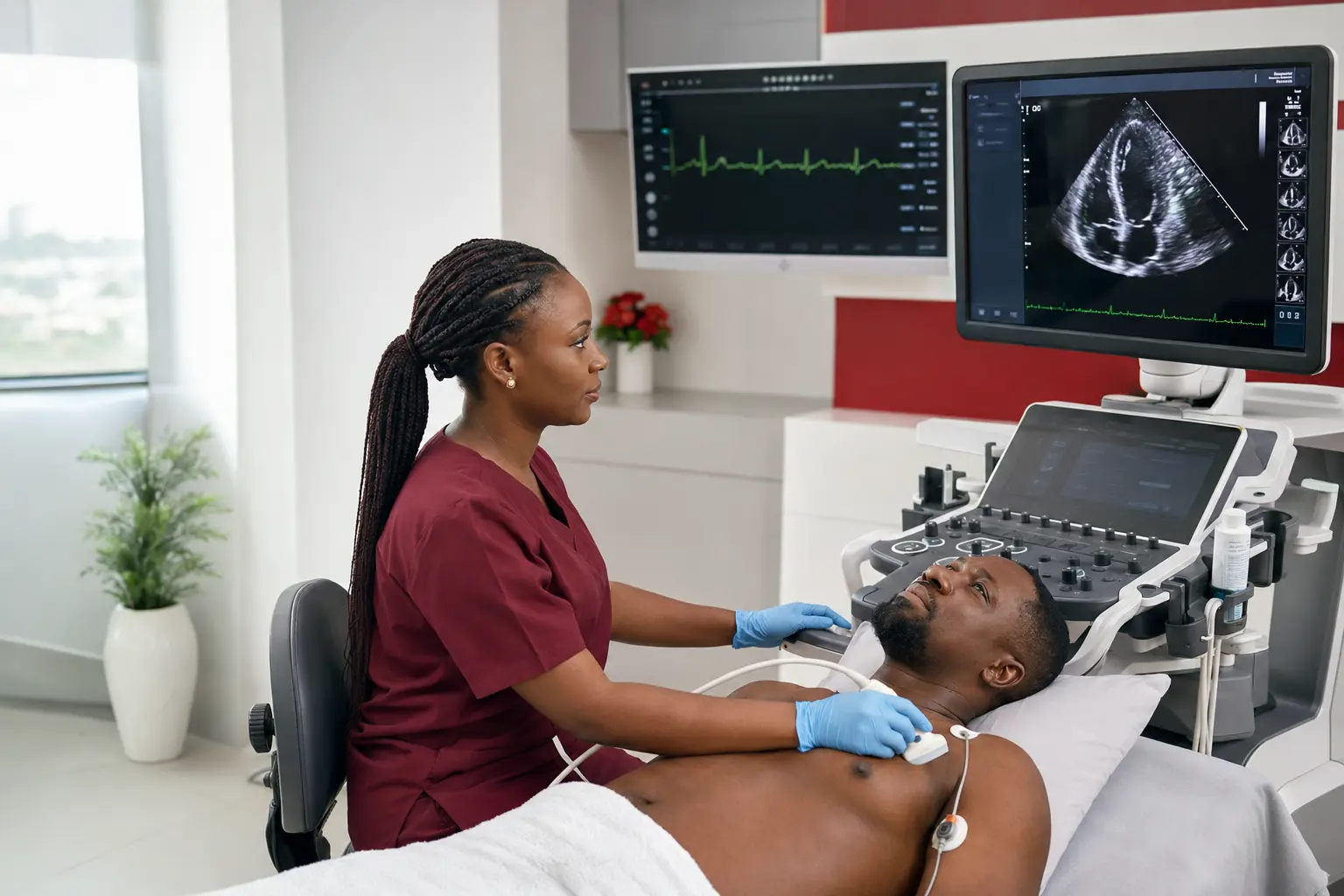
Living with an ICD
An ICD monitors dangerous rhythms and can deliver treatment when needed.
Understanding an ICD
An implantable cardioverter-defibrillator (ICD) is a small device, implanted under the skin near the collarbone with one or more leads running to the heart, that watches the heart's rhythm continuously. If it detects a dangerously fast rhythm coming from the heart's lower chambers (a ventricular arrhythmia) that could otherwise cause cardiac arrest, it acts — sometimes with rapid pacing that most people do not feel at all, and, if that does not correct the rhythm, with an electrical shock that resets it back to normal. Between those moments, an ICD also works quietly as a pacemaker if the heart beats too slowly.
An ICD may be recommended for people who have already survived a dangerous ventricular arrhythmia or cardiac arrest, or for people whose heart function is significantly reduced — usually measured by an echocardiogram — and who are therefore at meaningfully higher risk of one occurring, even if it has never happened before. The decision to implant one is individual, made after assessing your specific heart condition, and your clinician will explain exactly why it is being recommended for you.
What an ICD involves day to day
These are useful things most patients notice or should know, not a checklist for diagnosing yourself.
- ●A small firm lump is usually felt under the skin near the collarbone, most noticeable in the weeks after implantation
- ●The wound needs care and time to heal fully
- ●The device is checked regularly (interrogated) in clinic, and its battery is monitored over its lifespan
- ●Most people never receive a shock, but knowing what one feels like and what to do matters if it happens
- ●Certain strong electromagnetic sources need caution, though most everyday electronics are safe
What happens on the day
The pathway on the day and afterwards typically includes:
- 01Clinical and rhythm-risk assessment. Review of your heart function, rhythm history and overall health to confirm an ICD is the right choice.
- 02Implantation. Performed under local anaesthetic with sedation; the device is placed in a pocket under the skin near the collarbone and the leads are guided to the heart through a vein, usually taking around an hour.
- 03Testing. The device's ability to sense and respond to the heart's rhythm is checked before you leave the procedure room.
- 04Programming. Settings are tailored to your individual heart rhythm and risk, including the exact rhythm speeds that should trigger pacing versus a shock.
- 05Long-term follow-up. Regular device checks and, where relevant, ongoing heart-failure or rhythm care continue for as long as you have the device.
What a shock feels like
Most people with an ICD never receive a shock. When one does happen, patients most often describe it as a sudden, hard thump or kick in the chest — brief, startling, and sometimes strong enough to make you gasp or momentarily lose your balance if standing. It is understandably frightening the first time, but the device is doing exactly what it is designed to do: correcting a dangerous rhythm that your body could not correct on its own. Quieter pacing, used for slower rhythm problems or as a first attempt to correct a fast rhythm before a shock is needed, usually is not felt at all.
What to do after a shock
What matters most afterwards is how you feel, and whether it happens once or repeatedly:
- ●A single shock, otherwise feeling well. Sit or lie down safely, stay calm, and contact your care team the same day to report it — it still needs to be checked, even if you feel fine.
- ●Repeated shocks, or a shock together with feeling unwell — chest pain, severe breathlessness, dizziness, fainting or collapse — is a medical emergency.
Is this an emergency?
Right now
- More than one shock in a short period
- A shock together with chest pain, severe breathlessness, collapse or fainting
- Fainting or prolonged symptoms with or without a shock
- Signs of pocket infection with fever or feeling generally unwell
Go to the nearest emergency department immediately — do not drive yourself. Call Cardiocare's 24/7 emergency line on +234 806 142 4614 (staffed around the clock) to tell us you are coming.
Call Cardiocare 24/7Book this week
Contact your care team within days for a single shock while otherwise well, new swelling, redness or discomfort at the device site without fever, or any change in symptoms you would like reviewed.
Routine review
Scheduled device checks, and questions about daily life with the device, can be discussed at your next routine follow-up appointment.
Daily life with an ICD
Most people return to the great majority of their normal activities once healed, with some practical adjustments.
- ✓Carry your device identification card at all times, including when travelling
- ✓Discuss driving restrictions with your care team — these depend on your specific rhythm history and whether you have had a shock
- ✓Most household appliances and mobile phones are safe; keep phones and other devices with strong magnets a short distance from the device site as advised
- ✓Tell airport security staff about your device before screening — a hand-search alternative to walking through the arch is usually available, and hand-held wands should not be held directly over the device for long
- ✓Ask your team before any MRI scan, surgery, or use of equipment involving strong electrical or magnetic fields, including some industrial and welding equipment
- ✓Keep every device-interrogation appointment, even when you feel completely well
Preparing for your appointment
What to bring
- ✓Your device identification card
- ✓A list of all medicines you take, including herbal and over-the-counter preparations
- ✓Your HMO card or payment details
- ✓A valid means of identification
What we will ask
Whether you have felt any pacing or shocks since your last visit, any pocket-site symptoms, and how you are managing daily activities and driving.
Questions worth asking us
- ●What exactly will a shock from my device feel like, and when would it happen?
- ●What should I do immediately after a shock?
- ●What are my current driving and activity restrictions?
- ●How long is my device's battery expected to last, and what happens at replacement?