01
New chest discomfort, breathlessness, palpitations or fainting
↗
Rhythm and blood-pressure monitoring for symptoms that may not appear during one clinic visit.
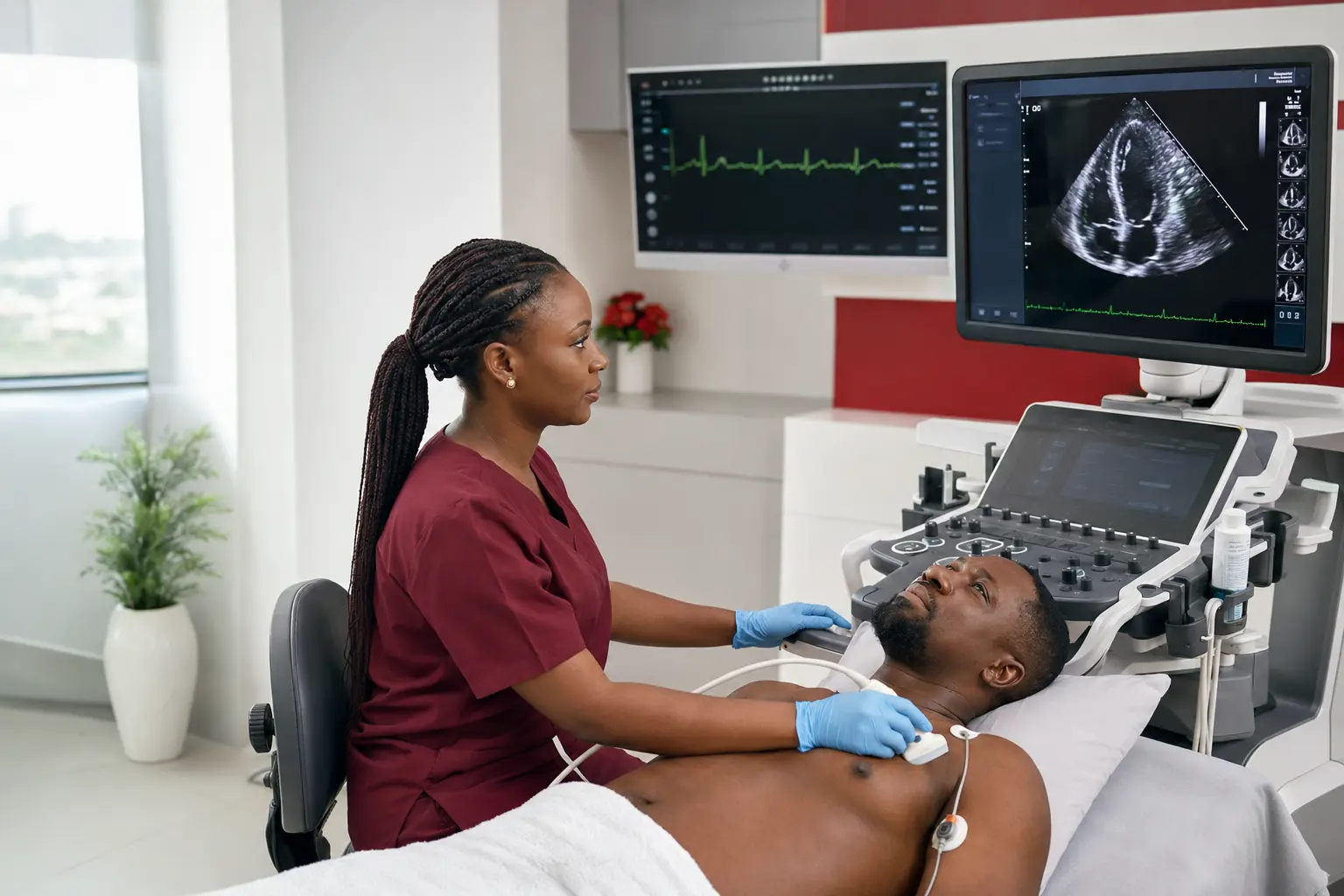
Short and extended monitoring can help connect palpitations, dizziness, fainting, blood-pressure patterns or treatment response with objective recordings.
Cardiovascular tests can show heart structure, rhythm, circulation, blood-pressure patterns and response to activity. We start with the clinical question, select an appropriate investigation and explain what the result does—and does not—mean for the next decision.
Testing should reduce uncertainty, not create more confusion. We explain why the test was requested, what to expect and how the result connects to your care plan.
These are common starting points, not a diagnostic checklist. The right assessment depends on the full clinical picture.
New chest discomfort, breathlessness, palpitations or fainting
↗An abnormal examination, ECG or laboratory result
↗Monitoring a known heart or valve condition
↗Planning a procedure or operation
↗Checking response to treatment
↗Clarifying conflicting or incomplete previous results
↗Every capability is selected according to clinical need. Your team should explain why a test, treatment or referral is being considered.
A 12-lead ECG records the heart's electrical activity at rest in a few minutes.
→A Holter monitor records heart rhythm continuously to catch symptoms a single ECG might miss.
→Ambulatory blood-pressure monitoring tracks readings over a full day and night of normal activity.
→Stress ECG records the heart's response to exercise on a treadmill.
→Every tracing is reviewed by a specialist before the result is reported back.
→Complex medicine feels more manageable when every stage is visible and every question has a place.
A clinician identifies what needs to be confirmed, excluded or monitored.
The team explains clothing, fasting, medicines or activity instructions where relevant.
Trained staff obtain the measurements and images needed for reliable interpretation.
The result is read in clinical context rather than treated as an isolated number or image.
The report feeds into follow-up, treatment, another test or reassurance when no further action is needed.
Monitoring results are interpreted within a complete cardiology service with device and intervention pathways available. This is why patients, families and referring clinicians choose Cardiocare for care that may need more than one specialist or facility.
Consultation, diagnostics, intervention, surgery, ICU/HDU, dialysis and recovery can coordinate without fragmenting the patient journey.
Advanced catheter, device and surgical expertise—including Northern Nigeria’s first cardiac left bundle branch pacing—reflects a culture of clinical progress.
Round-the-clock emergency, ICU and HDU support surrounds patients whose needs may change quickly.
Cardiology works alongside nephrology, endocrinology, neurology, pulmonology, surgery and other specialists when one diagnosis is not the whole story.
International-level cardiovascular capability in Abuja helps families avoid unnecessary travel abroad and remain closer to their support system.
Plain-language teaching, patient guides, support programmes and professional education turn expertise into confidence.
Open each question for a straightforward explanation. Your own clinician should still interpret what it means for you.
Ask the Cardiocare teamNo. Some findings are minor, temporary or need comparison with symptoms and other tests before their importance is clear.
Sometimes, but many cardiovascular questions need several pieces of information—history, examination, ECG, imaging or laboratory results.
The clinical team should review the finding with you and explain the next step. Timing depends on the test and urgency.
If a result needs specialist review, intervention, surgery or monitored care, those pathways are already connected.
Prepare questions, understand warning signs and revisit explanations at your own pace.
This page is educational and cannot diagnose a condition or determine which treatment is right for an individual. A clinician must assess symptoms, results, medicines and overall health. Severe or rapidly worsening symptoms need urgent care.
Emergency? Go to the nearest emergency department — do not drive yourself. Our cath lab is on standby 24/7.
Call 24/7: +234 806 142 4614