
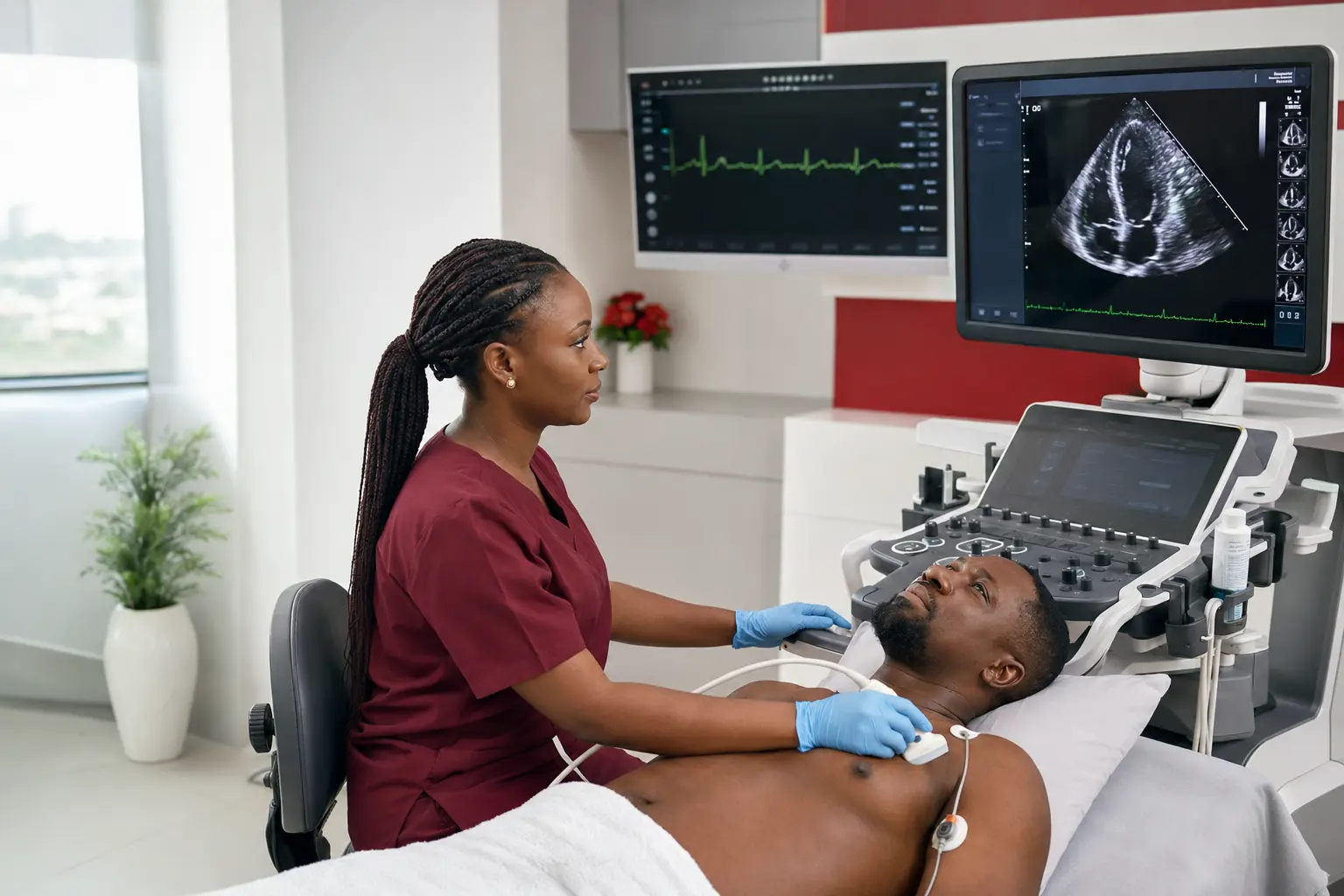
24-hour blood-pressure monitoring
ABPM records blood pressure through the day and night.
When ambulatory blood-pressure monitoring is recommended
A single blood-pressure reading in clinic only captures one moment, and that moment is not always representative — many people are more anxious in a clinic than at home, and blood pressure naturally rises and falls through the day and night. Ambulatory blood-pressure monitoring (ABPM) uses a cuff and a small recorder worn for a full day and night to build a much fuller picture, taking dozens of readings during ordinary daily life, including sleep.
ABPM is typically recommended to check for white-coat hypertension (readings that are raised in clinic but normal elsewhere, related to the anxiety of being examined), masked hypertension (the opposite — normal in clinic but raised elsewhere, which a single clinic visit would miss entirely), to see whether blood pressure falls as expected during sleep, or to check how well blood-pressure medicines are working across a full day rather than at one appointment.
What the two numbers, and the pattern, mean
Every reading gives two numbers: the systolic pressure (the higher number, the force in the arteries as the heart beats) and the diastolic pressure (the lower number, the pressure between beats as the heart relaxes and refills). A single pair of numbers tells you a moment; ABPM tells you a pattern, which is often more useful.
Blood pressure normally follows a rhythm through the day: usually higher during waking, active hours, and dipping lower during sleep. Whether that expected night-time dip happens, and how blood pressure behaves around waking, are patterns a single clinic reading cannot show but ABPM can — which is part of why it can add real information beyond a higher or lower number on its own.
Situations where ABPM is particularly useful
- ●Clinic readings that are inconsistently high or borderline, where it is unclear if this reflects true blood pressure or clinic anxiety
- ●Diabetes or chronic kidney disease, where accurate blood-pressure control matters especially closely
- ●Blood pressure that remains high despite several medicines (resistant hypertension), to confirm the pattern before adjusting treatment further
- ●Symptoms that might relate to blood pressure swings, such as headaches or dizziness at particular times of day
- ●Confirming a new diagnosis of high blood pressure before starting long-term medicine
Preparing for your monitoring day
- ✓Wear a loose-sleeved top so the cuff can be fitted comfortably to your upper arm
- ✓Plan to go about your normal day — work, errands, usual activity — since the point of the test is to capture ordinary life, not a rest day
- ✓Bring a list of your current medicines, including timing, in case this affects interpretation
- ✓Set aside a little extra time at your appointment for fitting and a short explanation of how the monitor works
Fitting the monitor
A member of the team measures your arm and fits an appropriately sized cuff, connected to a small recorder that clips to a belt or strap or sits in a small pouch. The device is set to inflate and take a reading automatically at set intervals — typically more frequently during the day and less often overnight — for around 24 hours in total. You are shown how the device works, what the readings and any alerts mean, and given a diary to note your activities, sleep and any symptoms.
What to expect while wearing it
- ●The cuff inflates firmly for a few moments at each reading, similar to a normal blood-pressure check, then releases
- ●Readings continue through the day and while you sleep, and may briefly wake you or interrupt what you are doing
- ●You can continue normal daily activity between readings; the arm should stay relatively still and relaxed during an actual reading
- ●Most people find the monitor a manageable, if mildly disruptive, inconvenience for one day rather than something painful
Keeping the diary is genuinely useful — noting when you were active, resting, asleep, stressed, or took a medicine helps your clinician make sense of readings that vary through the day.
Is this an emergency?
Right now
- A very high reading accompanied by severe headache, chest pain, breathlessness, visual changes or confusion needs immediate assessment rather than waiting to complete the monitoring period
- Any severe symptoms while wearing the monitor, regardless of what the device shows
Go to the nearest emergency department immediately — do not drive yourself. Call Cardiocare's 24/7 emergency line on +234 806 142 4614 (staffed around the clock) to tell us you are coming.
Call Cardiocare 24/7Book this week
If you notice the monitor has stopped working, the cuff repeatedly fails to inflate, or you are unsure whether to continue wearing it, contact the unit rather than waiting until your scheduled return.
Routine review
Discussing your results and any medicine changes is done at your follow-up appointment once the recording is analysed.
How Cardiocare turns your readings into a result
- 01Correct cuff fitting. An appropriately sized cuff, fitted correctly at the start, is the foundation of an accurate recording.
- 02A normal-day activity record. Your diary of activity, sleep and symptoms gives context to the pattern of readings.
- 03Computer analysis of readings. The full set of recorded readings is downloaded and analysed for daytime and night-time averages and patterns.
- 04Clinical interpretation and treatment plan. A clinician reviews the analysis alongside your history and clinic readings to reach a diagnosis and, where needed, a treatment plan.
Your clinician interprets the daytime average, night-time average and overall pattern together, alongside your symptoms, other risk factors and clinic readings — the result is a fuller picture used to guide diagnosis and treatment, not a single pass/fail number. For general background on high blood pressure and how it is managed day to day, see our guides to understanding hypertension and making sense of a home blood-pressure log.
Honest information about risks
ABPM is a low-risk, non-invasive test, but it is fair to know what can happen:
- ●Mild discomfort, bruising or petechiae (tiny red spots) on the arm from repeated cuff inflation, usually settling on its own
- ●Skin irritation under the cuff or strap over a full day of wear
- ●Disturbed sleep from overnight readings
- ●A recording that has to be repeated if too many readings fail or the diary is incomplete
After the monitoring period
- ✓Keep the arm relatively still during each automatic inflation, and let the cuff complete its cycle
- ✓Record sleep, medicines, symptoms and unusual events in the diary provided
- ✓Do not remove the monitor or cuff yourself unless instructed to
- ✓Return the device promptly, as arranged, so the readings can be analysed
- ✓There is no special recovery needed afterwards — most people resume everything as normal immediately once the monitor is removed
Preparing for your results appointment
What to bring
- ✓A list of all medicines you take, including herbal and over-the-counter preparations
- ✓Your completed activity and symptom diary
- ✓Your HMO card or payment details
- ✓A valid means of identification
What we will ask
How the monitoring day went, whether it reflected a typical day for you, any symptoms you noticed, and your current medicines and how consistently you take them.
Questions worth asking us
- ●What did my readings show, and how do they compare with my clinic readings?
- ●Do I need any change to my blood-pressure medicine?
- ●Should I repeat this test in future, and when?
- ●What can I do day-to-day to support healthy blood pressure?