01
A serious cardiac or medical emergency
↗
Round-the-clock specialist monitoring and organ support for critically ill, post-intervention and post-surgical patients.
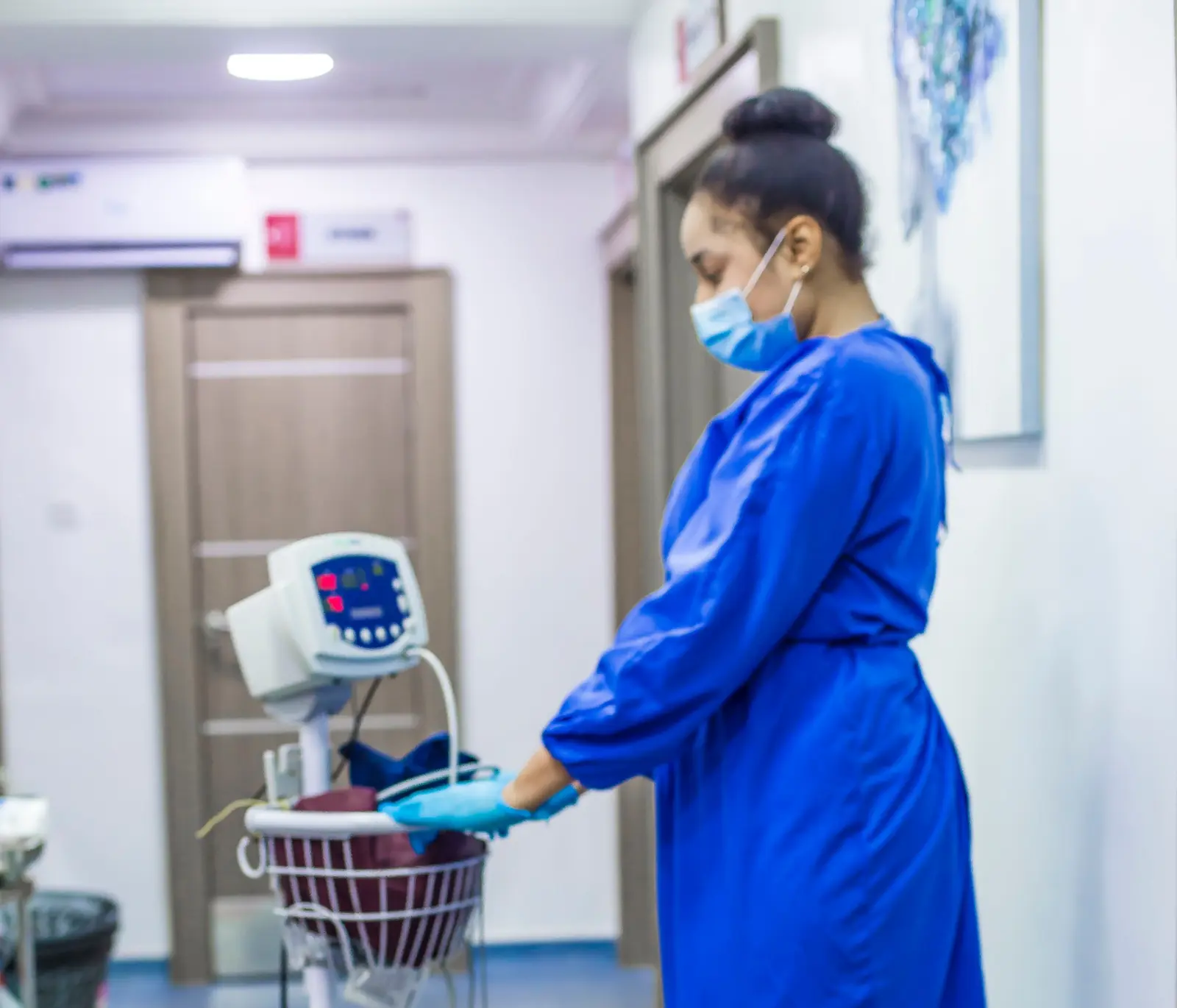
Cardiocare’s ICU and HDU are central to our advanced-care model—not an add-on. The units support seriously unwell patients, complex cardiovascular emergencies, recovery after cath-lab procedures and the full postoperative cardiac surgery pathway.
Critical and high-dependency care provide closer observation, rapid treatment and organ support for people who are seriously unwell or recovering from complex procedures and surgery. Cardiocare’s model keeps cardiology, surgery, nephrology, dialysis, imaging and laboratory support within one hospital.
Critical illness is frightening for patients and families. Our role is to combine vigilant clinical care with calm, honest communication and a clear plan for each stage of recovery.
These are common starting points, not a diagnostic checklist. The right assessment depends on the full clinical picture.
A serious cardiac or medical emergency
↗Severe heart failure or unstable circulation
↗Recovery after cardiac surgery
↗Closer monitoring after a complex catheter procedure
↗Breathing, kidney or blood-pressure support
↗Transfer for multidisciplinary management of a deteriorating patient
↗Every capability is selected according to clinical need. Your team should explain why a test, treatment or referral is being considered.
Nursing and physician cover continues around the clock in our ICU and HDU.
→Heart rhythm, blood pressure and circulation are tracked continuously on monitoring equipment.
→Ventilator support, invasive or non-invasive, is available for patients whose breathing needs assistance.
→Patients recovering from cardiac surgery are supported here until organ function stabilises.
→Patients are monitored here after angiography, PCI or a device procedure until they are stable for the ward.
→Severe heart failure and cardiogenic shock are managed with continuous monitoring and organ support.
→Cardiology, surgery, nephrology and dialysis teams escalate jointly when a patient's needs cross specialties.
→Isolation precautions and regular family updates are maintained alongside clinical care.
→Complex medicine feels more manageable when every stage is visible and every question has a place.
The team identifies immediate threats and starts stabilisation while gathering essential information.
Rhythm, blood pressure, oxygen and organ function are followed closely.
Cardiology, critical care, surgery and other teams align treatment around the main problem and complications.
The team explains changes, priorities and the current plan as clearly as the situation allows.
When stable, care moves gradually toward HDU, ward care, rehabilitation and follow-up.
Critical care is embedded within the same centre as cardiology, cardiac surgery, the cath lab, laboratory, imaging and dialysis, enabling faster coordination when a patient’s condition changes. This is why patients, families and referring clinicians choose Cardiocare for care that may need more than one specialist or facility.
Consultation, diagnostics, intervention, surgery, ICU/HDU, dialysis and recovery can coordinate without fragmenting the patient journey.
Advanced catheter, device and surgical expertise—including Northern Nigeria’s first cardiac left bundle branch pacing—reflects a culture of clinical progress.
Round-the-clock emergency, ICU and HDU support surrounds patients whose needs may change quickly.
Cardiology works alongside nephrology, endocrinology, neurology, pulmonology, surgery and other specialists when one diagnosis is not the whole story.
International-level cardiovascular capability in Abuja helps families avoid unnecessary travel abroad and remain closer to their support system.
Plain-language teaching, patient guides, support programmes and professional education turn expertise into confidence.
Open each question for a straightforward explanation. Your own clinician should still interpret what it means for you.
Ask the Cardiocare teamICU generally provides the highest level of monitoring and organ support. HDU supports patients who need closer care than a standard ward but less intensive support than ICU.
The team follows confidentiality and unit policies while keeping the patient’s approved family contact informed.
Critical-care clinicians coordinate with the specialty responsible for the main illness, such as cardiology, cardiac surgery or nephrology.
Recovery may continue in HDU or a ward, followed by rehabilitation, medication review and specialist follow-up.
This page is educational and cannot diagnose a condition or determine which treatment is right for an individual. A clinician must assess symptoms, results, medicines and overall health. Severe or rapidly worsening symptoms need urgent care.
Referring clinician? Refer a patient in minutes.
Emergency? Go to the nearest emergency department — do not drive yourself. Our cath lab is on standby 24/7.
Call 24/7: +234 806 142 4614