
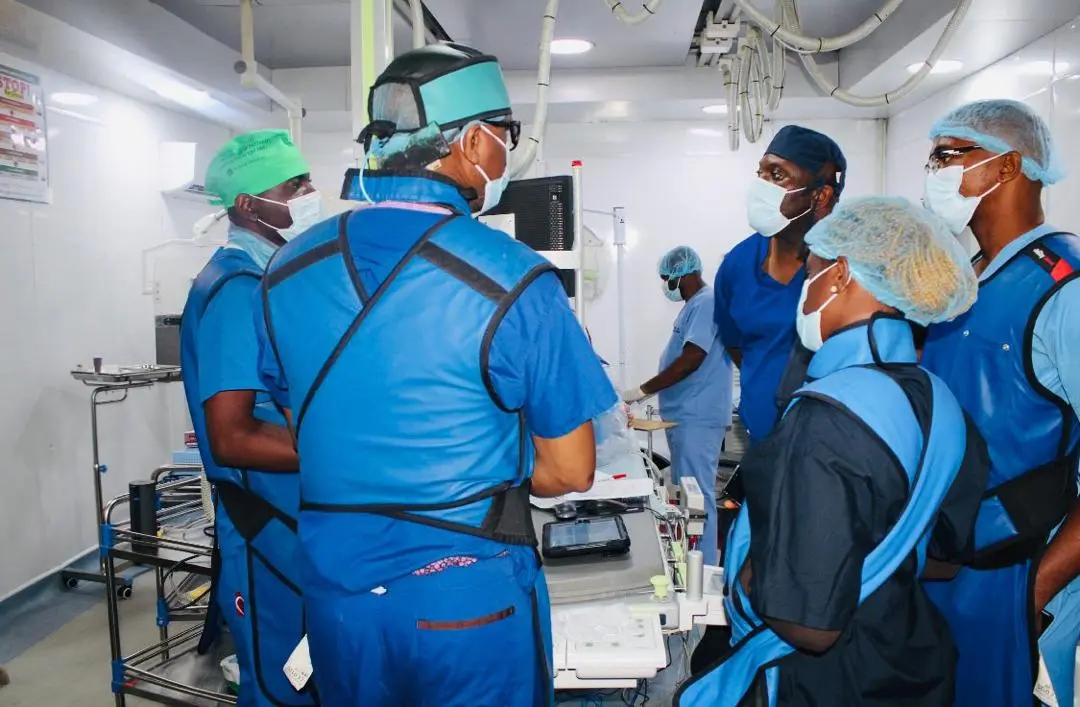
Angioplasty and coronary stents
PCI uses a balloon and usually a stent to improve blood flow through a selected narrowed heart artery.
Understanding angioplasty and stents
Percutaneous coronary intervention, usually called PCI or coronary angioplasty, is a catheter-based procedure that opens a narrowed or blocked heart artery without open surgery. It is recommended when a coronary artery has narrowed enough to limit blood flow to the heart muscle, causing angina or, in an emergency, a heart attack, and when the artery's location and pattern of narrowing are suitable for this approach rather than bypass surgery.
The procedure works in stages. A long, thin, flexible tube (a catheter) is guided through a blood vessel, usually from the wrist or groin, to the entrance of the narrowed artery. A tiny balloon at the catheter's tip is inflated to press the narrowing outward and reopen the channel — this is the angioplasty. A stent, a small expandable mesh tube, is then commonly left in place to act as scaffolding, holding the artery open. Some stents are coated with a medicine that reduces the chance of the treated area narrowing again over time.
How it relates to other options
- ●May be performed during the same session as a diagnostic coronary angiogram, once narrowing is confirmed
- ●Can be planned in advance for stable angina, or performed urgently for a heart attack
- ●Usually avoids the large incision and longer recovery of open bypass surgery
- ●Does not remove the need for long-term risk-factor treatment — it treats the narrowing, not the underlying artery disease
Preparing for the procedure
The exact preparation depends on whether the procedure is planned or urgent, but generally includes:
- 01Blood tests. Including kidney function, since the contrast dye used for imaging is cleared by the kidneys.
- 02Medicine review. Deciding which medicines to take, pause or adjust on the day, including blood-thinners and, for some patients, diabetes medicines.
- 03Fasting instructions. Usually required for a period before the procedure, as given by your team.
- 04Consent and risk discussion. A conversation about your specific findings, the plan and its risks before you agree to proceed.
- 05Arranging transport home. You will not be able to drive yourself afterwards.
What happens on the day
On the day, the procedure typically follows this sequence:
- 01Access and local anaesthetic. The wrist or groin area is cleaned and numbed; you are awake throughout, usually with light sedation to help you relax.
- 02Angiographic assessment. Contrast dye and X-ray imaging map the exact location and severity of the narrowing.
- 03Balloon angioplasty. A balloon is guided to the narrowing and inflated briefly to reopen it.
- 04Stent selection and placement. A stent sized to your artery is positioned and expanded to hold the artery open.
- 05Monitored recovery and medicine planning. The access site is closed or compressed, and you are monitored while medicines are started or confirmed.
How it feels
Most people feel pressure rather than pain at the access site, and a brief warm, flushing sensation when the contrast dye is injected is common and expected. You lie fairly still on the table throughout, and the team talks you through each step as it happens. Tell the team immediately about any chest discomfort, unusual pain or anxiety during the procedure.
Getting your results
Your cardiologist can usually tell you how the procedure went, and show you the images, before you leave the procedure room or shortly after in recovery. This includes how many arteries were treated, how many stents were placed, and how the blood flow looks afterward. Your medicine plan, particularly antiplatelet therapy, is confirmed at this point and explained to you before discharge.
After the procedure
- ✓Take antiplatelet medicines exactly as prescribed, for the full duration advised
- ✓Do not stop these medicines without cardiology advice, even briefly
- ✓Attend cardiac rehabilitation and follow-up as arranged
- ✓Continue lifestyle and risk-factor treatment — the stent treats the narrowing, not the underlying disease
- ✓Report any return or change of chest symptoms promptly
Do not wait if this happens
- Severe chest pain after discharge
- Significant access-site bleeding, or a cold, pale or numb limb
- Collapse, stroke symptoms or sudden breathlessness
Go to the nearest emergency department immediately — do not drive yourself. Call Cardiocare's 24/7 emergency line on +234 806 142 4614 (staffed around the clock) to tell us you are coming.
Call Cardiocare 24/7Preparing for your appointment
What to bring
- ✓A list of all medicines you take, including herbal and over-the-counter preparations
- ✓Any previous ECGs, scans, blood test results or hospital letters
- ✓Your HMO card or payment details
- ✓A valid means of identification
- ✓Someone who can take you home afterward
What we will ask
Your symptoms, any previous heart tests or procedures, your medicines, allergies, and any previous reaction to contrast dye.
Questions worth asking us
- ●Is angioplasty the right option for me, or should bypass surgery be considered?
- ●How many arteries are affected, and how many stents might I need?
- ●How long will I need to take antiplatelet medicine afterward?
- ●When can I return to work, driving and normal activity?